Gilley's in Pasadena. It was an establishment the locals frequented and became more infamous after the filming of Urban Cowboy. The old building burned down in 1990. It started when club owner, Sherwood Cryer, invited country music legend, Mickey Gilley, to join him as a partner in reopening a club he owned that had previously been named Shelley’s. Gilley’s opened its doors seven days a week, from 10 A.M. to 2 A.M. It lived to its motto, “We Doze but We Never Close.” Loretta Lynn, Roseanne Cash, Ernest Tubb, and Emmylou Harris all played at Gilley’s and several other famous country artists. Most of the performances were recorded live and archived. The nightly shows were then broadcasted weekly on the radio from 1977 to 1989, and was called “Live from Gilley’s.” It was carried nationally by more than 500 stations. The show was even broadcasted around the globe, thanks to Armed Forces Radio. However, in the late ’80s, Mickey Gilley and Sherwood Cryer had a falling out. Gilley became frustrated because he believed that Cryer has failed to maintain the place and present quality acts. Cryer also refused to make any significant renovations over the years. The crowd had constantly been complaining about dirty restrooms, a bad parking lot, and several other problems.
The contentious feud between the owners led to the club being closed and, eventually, a lengthy court battle. In 1988, Gilley sued to gain control of the club. He claimed that Cryer had been keeping profits. Cryer lost a $17 million lawsuit to singer Gilley when a jury found out that he had siphoned off big amounts of cash from businesses owned by the two men. Gilley continued operating the 70,000-square-foot club until the judge ordered Gilley’s to close down in 1989 due to loss of profits. Sadly, on July 5, 1990, an arson fire attack destroyed the main building. The fire fiercely burned in the all-wood structure, reaching the rodeo arena and recording studio. It prevented firefighters from entering the building, which is spread out over 140,000 square feet. Several fingers pointed to Cryer, but he denied involvement.
Site seems to be experiencing intermittent load issues. If site doesn't present the login screen, try clicking on 'login'
Traces of Tx (today)
-
Shakey Jake
- Drover
- Posts: 4351
- Joined: Wed Aug 16, 2017 11:10 am
- Location: Sugar Land, TX
- Contact:

Re: Traces of Tx (today)
- Attachments
-
- Gilleys.jpg (38.06 KiB) Viewed 1118 times
-
Shakey Jake
- Drover
- Posts: 4351
- Joined: Wed Aug 16, 2017 11:10 am
- Location: Sugar Land, TX
- Contact:
Re: Traces of Tx (today)
Stevie was invited to play the national anthem at the Houston Astros season opener, against the Los Angeles Dodgers at the Houston Astrodome in April 1985.
Stevie and Lenny Vaughan were hastily flown to Houston, where he confessed to his wife that he didn’t know how to play “The Star Spangled Banner”..
She hummed it to him in the limo on the way to the game.
Watching her husband play the national anthem there to a packed house in the cavernous Astrodome, Lenora turned to the guy standing next to her and said, “You know, he didn’t know how that went – I had to hum it to him on the way here.”
The man replied, “Yeah, it’s a hard song.”
When Lenora asked the man if he know her husband, he nodded and said, “No, this is the first time I’ve ever heard of him.
My name’s Mickey Mantle.”
Mantle was at the game to throw the first pitch; it was pure chance that Lenora found herself standing next to one of the greatest baseball players in history.
When Stevie joined her minutes later, she introduced the two men.
“I don’t know how to play that song,” Vaughan confided to Mantle, to which the Yankees great replied reassuringly, “Nobody can play that song.”
Lenora then sheepishly asked for Mantle’s autograph, upon which Mantle asked where here baseball bat was. “Oh… oh… am I supposed to have a bat?” she stammered. Mantle explained that most autograph seekers bring a bat.
Lenora remembers that “I was looking around for a piece of paper of something, and Stevie said, ‘Well I’ve got this bat right here – her name’s Lenny.’ And he took it out and said, “Why don’t you sign this?’
And Mickey said, ‘It’d be my pleasure..”
Source: The Best of SRV
Stevie and Lenny Vaughan were hastily flown to Houston, where he confessed to his wife that he didn’t know how to play “The Star Spangled Banner”..
She hummed it to him in the limo on the way to the game.
Watching her husband play the national anthem there to a packed house in the cavernous Astrodome, Lenora turned to the guy standing next to her and said, “You know, he didn’t know how that went – I had to hum it to him on the way here.”
The man replied, “Yeah, it’s a hard song.”
When Lenora asked the man if he know her husband, he nodded and said, “No, this is the first time I’ve ever heard of him.
My name’s Mickey Mantle.”
Mantle was at the game to throw the first pitch; it was pure chance that Lenora found herself standing next to one of the greatest baseball players in history.
When Stevie joined her minutes later, she introduced the two men.
“I don’t know how to play that song,” Vaughan confided to Mantle, to which the Yankees great replied reassuringly, “Nobody can play that song.”
Lenora then sheepishly asked for Mantle’s autograph, upon which Mantle asked where here baseball bat was. “Oh… oh… am I supposed to have a bat?” she stammered. Mantle explained that most autograph seekers bring a bat.
Lenora remembers that “I was looking around for a piece of paper of something, and Stevie said, ‘Well I’ve got this bat right here – her name’s Lenny.’ And he took it out and said, “Why don’t you sign this?’
And Mickey said, ‘It’d be my pleasure..”
Source: The Best of SRV
- Attachments
-
- SRV.jpg (57.45 KiB) Viewed 1108 times
-
Shakey Jake
- Drover
- Posts: 4351
- Joined: Wed Aug 16, 2017 11:10 am
- Location: Sugar Land, TX
- Contact:
Re: Traces of Tx (today)
On this day in 1758, Luís Antonio Menchaca and Andrés Hernández resolved a title dispute involving Menchaca's San Francisco ranch. Their compromise resulted in the oldest recorded private land grant in Texas. The grant, recorded in the General Land Office, consisted of a total of fifteen leagues and seven labores in present-day Karnes and Wilson counties, of which eleven leagues and two labores went to Menchaca and four leagues and five labores to Hernández. More is known of Menchaca's life than of Hernández's. Menchaca was born in 1713, the son of a career soldier, and died in 1793. He was a captain in the Spanish military and also served as justicia mayor of the villa of San Fernando. The census of 1779 showed him to be the richest man in the province of Texas. The dates of Hernández's birth and death are unknown, but he was for many years a soldier at San Antonio de Béxar Presidio. At the time of the grant, he made sworn statements to the effect that he had been living on the site for more than five years by virtue of a grant of four sitios and eight caballerías of land which had been made to his deceased father more than twenty-two years previously. It is possible that this was the site of the first ranch in Texas. Hernández's ranch headquarters was in the same locale as Fuerte de Santa Cruz del Cíbolo.
Source: TSHA online
ed: A league or sitio is (4428.4) acres of grazing land and a labor, labores (177.1 acres)
Source: TSHA online
ed: A league or sitio is (4428.4) acres of grazing land and a labor, labores (177.1 acres)
-
Shakey Jake
- Drover
- Posts: 4351
- Joined: Wed Aug 16, 2017 11:10 am
- Location: Sugar Land, TX
- Contact:
Re: Traces of Tx (today)
Charlie’s first preseason game as a Cowboy was against the Packers. He was a quarterback in college and absolutely idolized Bart Starr, Green Bay’s Hall of Fame quarterback.
With a third-and-nine situation, Starr dropped back and looked downfield for an open receiver. A few seconds into the play he raised the ball to throw but changed his mind and tucked it under his arm, electing to scramble for the first down. Bart crossed the line of scrimmage and began to veer toward the sideline as Charlie closed in on the veteran quarterback. Waters and Starr collided, and the play ended two yards short of the first-down marker.
Starr looked at Charlie and said, “Nice hit!” Charlie was so excited that he replied in a childlike manner, “Could I have your autograph?” Bart laughed and replied with, “Maybe after the game.”
Source: Memories of Texas Football
With a third-and-nine situation, Starr dropped back and looked downfield for an open receiver. A few seconds into the play he raised the ball to throw but changed his mind and tucked it under his arm, electing to scramble for the first down. Bart crossed the line of scrimmage and began to veer toward the sideline as Charlie closed in on the veteran quarterback. Waters and Starr collided, and the play ended two yards short of the first-down marker.
Starr looked at Charlie and said, “Nice hit!” Charlie was so excited that he replied in a childlike manner, “Could I have your autograph?” Bart laughed and replied with, “Maybe after the game.”
Source: Memories of Texas Football
- Attachments
-
- Waters.jpg (27.08 KiB) Viewed 1101 times
-
markiver54
- Deputy Marshal
- Posts: 11123
- Joined: Sun Nov 04, 2018 11:49 am
- Location: Biue Ridge Mountains, NC
Re: Traces of Tx (today)
Great player. I remember watching him play. I was a huge Cowboy fan back then.
I'm your Huckleberry


Re: Traces of Tx (today)
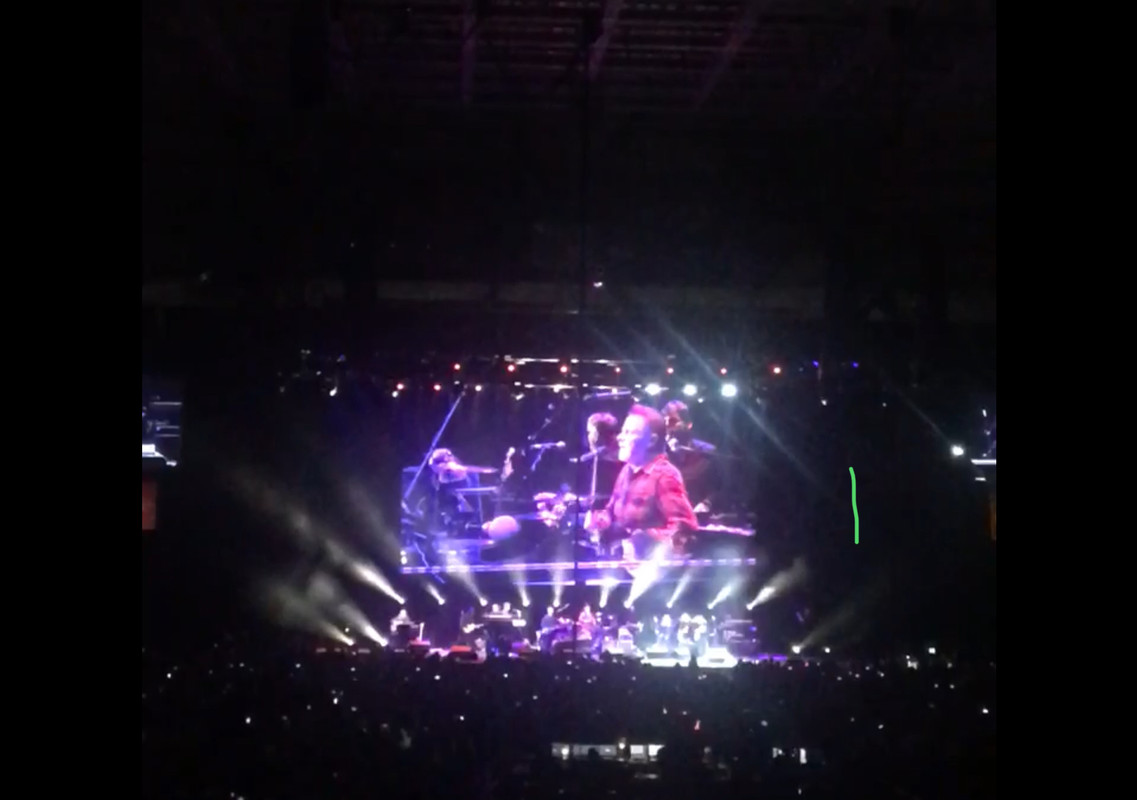
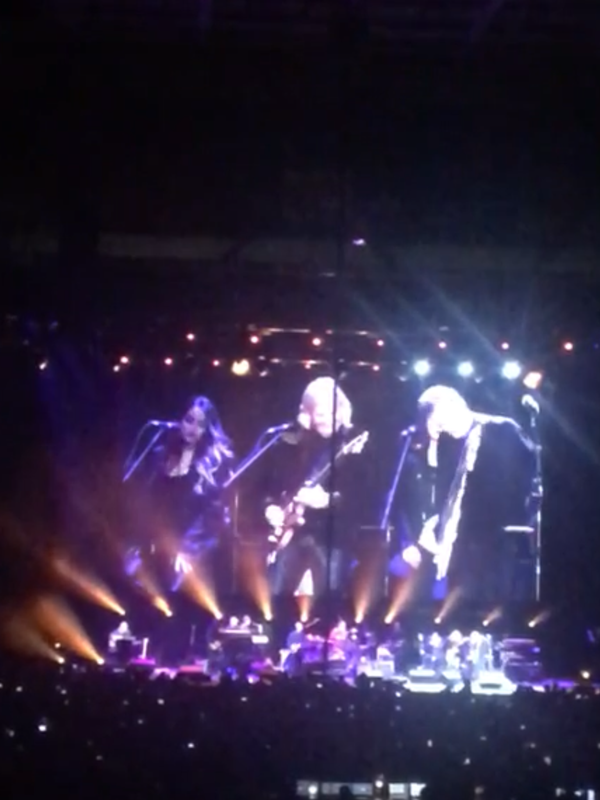
My biggest regret in life is missing my ride to get the 2 hours from where I lived in the mountains down to “the big city” to see Stevie Ray play live. They guy was an absolute legend! He finally had his chit more or less together and then some bad luck did him in. Such a shame! I have however since been to Texas, and seen Don Henley play live a couple of times. Not the same thing, but Don is still a good Texan.
That’s Don below playing with Joe Walsh. During the guitar solo on Hotel California.
SGC .22 LR Stripped and oiled up
BBSC .357 w Skinner Express & Patridge
BBSC .44 Magnum with Skinners
Marlin 1895GS .45-70 w RPP Cloverleaf
Marlin 336BL .30-30 w Skinner LoPro 2 and Sig 2-7x
1912 Winchester 1894 .30 WCF
BBSC .357 w Skinner Express & Patridge
BBSC .44 Magnum with Skinners
Marlin 1895GS .45-70 w RPP Cloverleaf
Marlin 336BL .30-30 w Skinner LoPro 2 and Sig 2-7x
1912 Winchester 1894 .30 WCF
-
Shakey Jake
- Drover
- Posts: 4351
- Joined: Wed Aug 16, 2017 11:10 am
- Location: Sugar Land, TX
- Contact:
Re: Traces of Tx (today)
GROCE’S CROSSING
It is this date in April 1836, that Houston moved the retreating Texas Army from San Felipe, up the Brazos River to Groce’s Crossing. Houston was aware that the little steamship Yellowstone was moored at the Benardo Plantation, loading cotton, so he sent a note by runner to the Captain of the boat, to wait, and help Houston move the Texas Army across the Brazos River to the east side.
This historical event is recorded in detail in Texas History but very few people know anything about the little steamboat, Yellowstone, which was commissioned in New Orleans in 1832, for work on the Yellowstone River in Montana.
Source: Marshall E Kuykendall
It is this date in April 1836, that Houston moved the retreating Texas Army from San Felipe, up the Brazos River to Groce’s Crossing. Houston was aware that the little steamship Yellowstone was moored at the Benardo Plantation, loading cotton, so he sent a note by runner to the Captain of the boat, to wait, and help Houston move the Texas Army across the Brazos River to the east side.
This historical event is recorded in detail in Texas History but very few people know anything about the little steamboat, Yellowstone, which was commissioned in New Orleans in 1832, for work on the Yellowstone River in Montana.
Source: Marshall E Kuykendall
- Attachments
-
- Yellowstone.jpg (76.58 KiB) Viewed 1051 times
-
Shakey Jake
- Drover
- Posts: 4351
- Joined: Wed Aug 16, 2017 11:10 am
- Location: Sugar Land, TX
- Contact:
Re: Traces of Tx (today)
The Texas Quote of the Day is a description of the notorious outlaw-turned-rancher King Fisher, who was apparently quite the dandy in his day:
"King Fisher and his followers stole the settlers' livestock; robbed their corn cribs; and murdered those who opposed them.
Fisher was then [the late 1870s] about twenty-five years old, and a perfect specimen of frontier dandy. He was tall and exceedingly handsome. He wore the finest clothes procurable, and of the picturesque, dime-novel type. His white, broad-brimmed sombrero was ornamented with gold and silver lace and had a golden snake for a band. His Mexican short jacket of fine buckskin was heavily embroidered with gold. His sheer, expensive shirt was worn open at the throat, with a silk handkerchief knotted about its wide collar. A crimson silk sash was wound about his waist. His chaperejos, or "chaps," were made of a royal Bengal tiger, ornamented down the seams with gold fringe. The tiger's skin had been procured at a circus in Northern Texas. He and some of his fellows had literally captured the circus, killed the tiger and skinned it, just because the desperado chief fancied he'd like to have a pair of tiger skin "chaps." He wore high-heel boots of costly leather, and silver spurs ornamented with little silver bells. He rode the best horses he could steal in Texas and Mexico."
----- N.W. Jennings, "A Texas Ranger," 1930
Source: Traces of Texas Facebook group
"King Fisher and his followers stole the settlers' livestock; robbed their corn cribs; and murdered those who opposed them.
Fisher was then [the late 1870s] about twenty-five years old, and a perfect specimen of frontier dandy. He was tall and exceedingly handsome. He wore the finest clothes procurable, and of the picturesque, dime-novel type. His white, broad-brimmed sombrero was ornamented with gold and silver lace and had a golden snake for a band. His Mexican short jacket of fine buckskin was heavily embroidered with gold. His sheer, expensive shirt was worn open at the throat, with a silk handkerchief knotted about its wide collar. A crimson silk sash was wound about his waist. His chaperejos, or "chaps," were made of a royal Bengal tiger, ornamented down the seams with gold fringe. The tiger's skin had been procured at a circus in Northern Texas. He and some of his fellows had literally captured the circus, killed the tiger and skinned it, just because the desperado chief fancied he'd like to have a pair of tiger skin "chaps." He wore high-heel boots of costly leather, and silver spurs ornamented with little silver bells. He rode the best horses he could steal in Texas and Mexico."
----- N.W. Jennings, "A Texas Ranger," 1930
Source: Traces of Texas Facebook group
- Attachments
-
- King Fisher.jpg (84.28 KiB) Viewed 1049 times
-
Shakey Jake
- Drover
- Posts: 4351
- Joined: Wed Aug 16, 2017 11:10 am
- Location: Sugar Land, TX
- Contact:
Re: Traces of Tx (today)
Mrs. M. E. Reed’s City Hotel on North Street, across the street from the Houston and Central Texas Railroad, Elgin, 1880s.
- Attachments
-
- City Hotel.jpg (76.94 KiB) Viewed 1034 times
-
Shakey Jake
- Drover
- Posts: 4351
- Joined: Wed Aug 16, 2017 11:10 am
- Location: Sugar Land, TX
- Contact:
Re: Traces of Tx (today)
Today's entry comes from All Things Texas:
The photo you see has been floating around different Texas history pages and many of them are wondering what was on this man's mind at the time it was taken?
The photo was taken by a photographer from Life Magazine in 1937.
The town is Freer, Texas in Duvall County. The history of Freer is quite extensive, but for us at All Things Texas we believe that we can give a little more context to this photo.
The single most important event in the history of Freer occurred in 1928. Three wildcatters drilling on the W. P. Norton property just southwest of what is now the Freer townsite struck one of the nation's largest oil reserves.
The discovery of oil soon turned Freer into what Life magazine called "the last of the tough frontier oil towns."
Those who had seen Freer grow into a town they called home soon realized that the oil boom was changing their way of life and not for the good to those who lived there.
The onset of the "Great Depression" soon saw a little bit of normalcy come to the town of Freer.
But, the 1930s were a decade of phenomenal growth in Freer. The town had two businesses in 1931, but by the spring of 1933, when a fire that started in the Bluebonnet Cafe on Main Street came close to destroying the town. The fire merely provided the citizens of Freer with an opportunity to display their resilience.
By 1936, when the community's population was estimated at 1,200, Freer had sixty businesses and was incorporated for a time. Two years later both the population and the number of businesses had doubled. The town quickly attracted a colorful cast of prostitutes, gamblers, drifters, and drunks, and a certain type of boomtown trash one could say.
So, we believe that this is a photo of an older gentleman just making sure that things on the streets of Freer, Texas remains calm.
Today the population of Freer, Texas is around 2,400.
The photo you see has been floating around different Texas history pages and many of them are wondering what was on this man's mind at the time it was taken?
The photo was taken by a photographer from Life Magazine in 1937.
The town is Freer, Texas in Duvall County. The history of Freer is quite extensive, but for us at All Things Texas we believe that we can give a little more context to this photo.
The single most important event in the history of Freer occurred in 1928. Three wildcatters drilling on the W. P. Norton property just southwest of what is now the Freer townsite struck one of the nation's largest oil reserves.
The discovery of oil soon turned Freer into what Life magazine called "the last of the tough frontier oil towns."
Those who had seen Freer grow into a town they called home soon realized that the oil boom was changing their way of life and not for the good to those who lived there.
The onset of the "Great Depression" soon saw a little bit of normalcy come to the town of Freer.
But, the 1930s were a decade of phenomenal growth in Freer. The town had two businesses in 1931, but by the spring of 1933, when a fire that started in the Bluebonnet Cafe on Main Street came close to destroying the town. The fire merely provided the citizens of Freer with an opportunity to display their resilience.
By 1936, when the community's population was estimated at 1,200, Freer had sixty businesses and was incorporated for a time. Two years later both the population and the number of businesses had doubled. The town quickly attracted a colorful cast of prostitutes, gamblers, drifters, and drunks, and a certain type of boomtown trash one could say.
So, we believe that this is a photo of an older gentleman just making sure that things on the streets of Freer, Texas remains calm.
Today the population of Freer, Texas is around 2,400.
- Attachments
-
- Town Marshall.jpg (38.49 KiB) Viewed 1026 times
-
Shakey Jake
- Drover
- Posts: 4351
- Joined: Wed Aug 16, 2017 11:10 am
- Location: Sugar Land, TX
- Contact:
Re: Traces of Tx (today)
During the 1950s and 1960s Shady’s Playhouse was a neighborhood blues club in the Third Ward of Houston that produced some of the best blues musicians in Texas. Shady’s Playhouse was originally in a large house with no interior walls located on Simmons Street between Sampson and Nettleton streets. During the late 1940s another club called Jeff’s Playhouse occupied the house. In the early 1950s Vernon Jackson, whose nickname was “Shady,” took over the club, and it became Shady’s Playhouse.
What made Shady’s special was the collection of shotgun houses called the “motel,” which served as living quarters for many of the musicians who performed there. With many of the musicians living together, they excelled and learned from each other. Experienced players, such as guitarist James “Widemouth” Brown, composer and producer Henry Hayes, and songwriter Joe Medwick, served as mentors to the young musicians. Within this atmosphere, legendary bluesmen such as Albert Collins, Johnny Copeland, Joe Hughes, Teddy Reynolds, and Johnny Watson honed their skills and stood out in the Houston music scene. Even with the talented musicians at Shady’s Playhouse, many people looked down upon Shady’s as too casual and relaxed. Furthermore, some people considered the music at Shady’s as unschooled and raw compared to the big-band, multi-instrumental music played at the upscale El Dorado Ballroom.
In 1958 Shady’s Playhouse moved from Simmons Street to a two-story concrete block building at 3117 Ennis Street, at the northeast corner of Ennis and Elgin streets. The building, which originally served as the Swan Hotel, was taken over by Shady, and the club was on the second floor. Open seven days a week, the establishment, with its tables adorned with signature red and white polka-dotted table cloths, had a capacity of approximately 200 to 250 people and presented both local talent and also some touring acts. Although some of the musicians and patrons did not like the new location as much as the original Shady’s Playhouse, the club was successful. From 1958 to 1963 the house band was the Dukes of Rhythm, which included renowned blues guitarists Joe Hughes and Johnny Copeland. Surrounded by soul-food restaurants, a boarding house, and the neighborhood pharmacy, Shady’s Playhouse was the main music venue in one of the Third Ward’s commercial areas.
Shady’s Playhouse closed in 1969, and few traces of the club are found today. In 2008 the original location on Simmons Street was a vacant lot, and the second location was nearly empty, with only a beauty salon on the first floor. Yet, the legacy of the venue continued in the music of the musicians who learned and played there.
What made Shady’s special was the collection of shotgun houses called the “motel,” which served as living quarters for many of the musicians who performed there. With many of the musicians living together, they excelled and learned from each other. Experienced players, such as guitarist James “Widemouth” Brown, composer and producer Henry Hayes, and songwriter Joe Medwick, served as mentors to the young musicians. Within this atmosphere, legendary bluesmen such as Albert Collins, Johnny Copeland, Joe Hughes, Teddy Reynolds, and Johnny Watson honed their skills and stood out in the Houston music scene. Even with the talented musicians at Shady’s Playhouse, many people looked down upon Shady’s as too casual and relaxed. Furthermore, some people considered the music at Shady’s as unschooled and raw compared to the big-band, multi-instrumental music played at the upscale El Dorado Ballroom.
In 1958 Shady’s Playhouse moved from Simmons Street to a two-story concrete block building at 3117 Ennis Street, at the northeast corner of Ennis and Elgin streets. The building, which originally served as the Swan Hotel, was taken over by Shady, and the club was on the second floor. Open seven days a week, the establishment, with its tables adorned with signature red and white polka-dotted table cloths, had a capacity of approximately 200 to 250 people and presented both local talent and also some touring acts. Although some of the musicians and patrons did not like the new location as much as the original Shady’s Playhouse, the club was successful. From 1958 to 1963 the house band was the Dukes of Rhythm, which included renowned blues guitarists Joe Hughes and Johnny Copeland. Surrounded by soul-food restaurants, a boarding house, and the neighborhood pharmacy, Shady’s Playhouse was the main music venue in one of the Third Ward’s commercial areas.
Shady’s Playhouse closed in 1969, and few traces of the club are found today. In 2008 the original location on Simmons Street was a vacant lot, and the second location was nearly empty, with only a beauty salon on the first floor. Yet, the legacy of the venue continued in the music of the musicians who learned and played there.
- Attachments
-
- Johnny Copeland.jpeg (108.59 KiB) Viewed 1315 times
-
Shakey Jake
- Drover
- Posts: 4351
- Joined: Wed Aug 16, 2017 11:10 am
- Location: Sugar Land, TX
- Contact:
Re: Traces of Tx (today)
Texas Fact of the Day:
Although Bob Wills and Milton Brown are considered the architects of western swing music, the core mix of fiddle and blues guitar goes back even further ----- to 1928 ----- when Archie, "Prince" Albert Hunt, shown here holding a guitar even though he was a fiddle player, recorded "Blues in a Bottle." Archie Albert Hunt was born in Terrell, Texas but is more closely associated with Denton. Without Archie there may never have been a Bob Wills, or at least the Bob Wills that we know.
Archie was was born in 1896 to to Archibald Hunt and Manasa Emma Lee Skates, both of whom were musicians. As a child, he learned to play the fiddle by stealing his father's instrument and self-teaching himself in a nearby graveyard. Though much of Hunt's personal life is obscure, it is known he served in the First World War, and his first professional work as a musician was as a member of a traveling minstrel show, in the early 1920s.
And so it came to pass that, on March 28, 1928, Hunt and his group, the Texas Ramblers, which included violinist Harmon Clem and an unknown guitarist, recorded in San Antonio for Okeh Records. Of the sides the group laid down, "Blues in the Bottle" was arguably his most accomplished for its diverse assortment of country blues, ragtime and old-time music. It was later included in Rich Nevins' compilation album, Times Ain’t Like They Used to Be, Volume 1 along with other contemporaries.
In addition to being a recording artist, Hunt regularly performed on local radio stations and venues, usually in blackface, with his neighbors Doc and Oscar Harper. Hunt particularly favored the neighborhood known as Deep Ellum, which was also frequented by other blues musicians and notorious for its red-light district. On June 26, 1929, Hunt and the Texas Ramblers recorded for the last time, with the session taking place in Dallas. Among the six songs recorded was "Wake Up, Jacob" which was featured on the renowned compilation created by Harry Everett Smith, Anthology of American Folk Music, in 1952. An unknown composition was cut, but was either never released or no original copies exist. The song, "Oklahoma Rag" was released as under Prince Albert Hunt and Hermon Clem. The recordings were later seen as a primary influence in Western swing and country music in general.
On March 31, 1931 Prince Albert Hunt was shot to death outside Confederate Hall in Dallas. His assailant, William M. Douglas, reported that he murdered Hunt out of jealousy for dancing with his wife.
Some weeks later, a Dallas grand jury exonerated Douglas for lack of evidence, despite the fact that his guilt was without question, since Douglas had admitted it. But the jury must have figured Prince Albert knew he was consorting with a married woman, so he got what was coming to him. His body was returned to Terrell, where today he lies in perpetual repose in Oakland Memorial Park.
In 1974, a documentary titled Memories of Prince Albert Hunt was released.
Here's the 1928 recording of Blues in a Bottle:
https://www.youtube.com/watch?v=EfT4cJA1n64
Although Bob Wills and Milton Brown are considered the architects of western swing music, the core mix of fiddle and blues guitar goes back even further ----- to 1928 ----- when Archie, "Prince" Albert Hunt, shown here holding a guitar even though he was a fiddle player, recorded "Blues in a Bottle." Archie Albert Hunt was born in Terrell, Texas but is more closely associated with Denton. Without Archie there may never have been a Bob Wills, or at least the Bob Wills that we know.
Archie was was born in 1896 to to Archibald Hunt and Manasa Emma Lee Skates, both of whom were musicians. As a child, he learned to play the fiddle by stealing his father's instrument and self-teaching himself in a nearby graveyard. Though much of Hunt's personal life is obscure, it is known he served in the First World War, and his first professional work as a musician was as a member of a traveling minstrel show, in the early 1920s.
And so it came to pass that, on March 28, 1928, Hunt and his group, the Texas Ramblers, which included violinist Harmon Clem and an unknown guitarist, recorded in San Antonio for Okeh Records. Of the sides the group laid down, "Blues in the Bottle" was arguably his most accomplished for its diverse assortment of country blues, ragtime and old-time music. It was later included in Rich Nevins' compilation album, Times Ain’t Like They Used to Be, Volume 1 along with other contemporaries.
In addition to being a recording artist, Hunt regularly performed on local radio stations and venues, usually in blackface, with his neighbors Doc and Oscar Harper. Hunt particularly favored the neighborhood known as Deep Ellum, which was also frequented by other blues musicians and notorious for its red-light district. On June 26, 1929, Hunt and the Texas Ramblers recorded for the last time, with the session taking place in Dallas. Among the six songs recorded was "Wake Up, Jacob" which was featured on the renowned compilation created by Harry Everett Smith, Anthology of American Folk Music, in 1952. An unknown composition was cut, but was either never released or no original copies exist. The song, "Oklahoma Rag" was released as under Prince Albert Hunt and Hermon Clem. The recordings were later seen as a primary influence in Western swing and country music in general.
On March 31, 1931 Prince Albert Hunt was shot to death outside Confederate Hall in Dallas. His assailant, William M. Douglas, reported that he murdered Hunt out of jealousy for dancing with his wife.
Some weeks later, a Dallas grand jury exonerated Douglas for lack of evidence, despite the fact that his guilt was without question, since Douglas had admitted it. But the jury must have figured Prince Albert knew he was consorting with a married woman, so he got what was coming to him. His body was returned to Terrell, where today he lies in perpetual repose in Oakland Memorial Park.
In 1974, a documentary titled Memories of Prince Albert Hunt was released.
Here's the 1928 recording of Blues in a Bottle:
https://www.youtube.com/watch?v=EfT4cJA1n64
- Attachments
-
- Archie Hunt.jpg (58.92 KiB) Viewed 1307 times
-
Shakey Jake
- Drover
- Posts: 4351
- Joined: Wed Aug 16, 2017 11:10 am
- Location: Sugar Land, TX
- Contact:
Re: Traces of Tx (today)
The magnificent Palo Duro Canyon. I've been there at least twice, maybe three times. I used to take kids to the West Texas State band camp near there. (It's been renamed West Texas A&M). Very beautiful.
- Attachments
-
- Palo Duro.jpg (222.71 KiB) Viewed 1298 times
-
Shakey Jake
- Drover
- Posts: 4351
- Joined: Wed Aug 16, 2017 11:10 am
- Location: Sugar Land, TX
- Contact:
Re: Traces of Tx (today)
Here's a nice picture of the Pleak, Tx store around 1900 from the friends at Rosenberg Hitorical Society. Pleak is just a wide spot in the road about eight miles south of Rosenberg on state highway 36. It's one of those places that if you blink, you'll miss it. Here's some information on Pleak from the good folks at TSHA online:
PLEAK, TX.Pleak is on State Highway 36 eight miles south of Richmond in south central Fort Bend County. The community probably developed in the 1920s as a result of activity in the nearby Pleak oilfield. The Pleak school district served some 150 pupils in 1926, and in 1940 the community consisted of a school, three businesses, and scattered dwellings. The Wilbur Krenek Cotton Gin was built in 1934 and was still being run by the Krenek family in the early 1990s. Pleak incorporated as the Village of Pleak in 1980, when it had about 365 residents; it reported a population of 746 in 1992. The population was 947 in 2000.
PLEAK, TX.Pleak is on State Highway 36 eight miles south of Richmond in south central Fort Bend County. The community probably developed in the 1920s as a result of activity in the nearby Pleak oilfield. The Pleak school district served some 150 pupils in 1926, and in 1940 the community consisted of a school, three businesses, and scattered dwellings. The Wilbur Krenek Cotton Gin was built in 1934 and was still being run by the Krenek family in the early 1990s. Pleak incorporated as the Village of Pleak in 1980, when it had about 365 residents; it reported a population of 746 in 1992. The population was 947 in 2000.
- Attachments
-
- Pleak.jpg (109.5 KiB) Viewed 1285 times
-
Shakey Jake
- Drover
- Posts: 4351
- Joined: Wed Aug 16, 2017 11:10 am
- Location: Sugar Land, TX
- Contact:
Re: Traces of Tx (today)
I guess my latest hiatus has only been about three weeks. I really don't know why I stopped posting daily except that I've had a lot of work lately and I haven't been in the best of sorts lately. Anyway, I found this golden gem this morning and thought I would share. I don't know that I'd be willing to sit or stand in a six-foot ditch and change targets for shooters. Seems a bit dangerous:
In the Luckenbach bar there is a photo (shown above) of the Grapetown Scheutzen Bund, the oldest, which started in 1887. The shooters prop their long rifles on wooden rests and shoot 200 yards. There are 10 brave people down in the 6 foot deep trench changing the target after each shot.
The Scheutzenfests were big outings and an excuse for the whole family to camp out. The women worked hard preparing food while the men shot the bull and targets. Always the practical Germans, usually money was raised for the hiring of a school teacher for the one-room school or for the benefit of the club itself. Bar-b-que was sold to the public, as well as homemade butter and baked goods. The evening’s entertainment was usually a dance. The Scheutzen Koenig (King) was the high point scorer, awarded a medal, and carried around on shoulders. But the lesser winners got to choose, in order of rank, their more practical array of prizes. First to go were the bullets and motor oil. Next was the Purina Dog Chow, aluminum chairs, calico sacks of flour, chicken feed and knives. Last chosen was artwork on the one towel and matching washcloth. There was the goat shoot-off; the goat being the prize, not the target.
-Der Maifest (May Days)
By Becky Crouch Barrales
In the Luckenbach bar there is a photo (shown above) of the Grapetown Scheutzen Bund, the oldest, which started in 1887. The shooters prop their long rifles on wooden rests and shoot 200 yards. There are 10 brave people down in the 6 foot deep trench changing the target after each shot.
The Scheutzenfests were big outings and an excuse for the whole family to camp out. The women worked hard preparing food while the men shot the bull and targets. Always the practical Germans, usually money was raised for the hiring of a school teacher for the one-room school or for the benefit of the club itself. Bar-b-que was sold to the public, as well as homemade butter and baked goods. The evening’s entertainment was usually a dance. The Scheutzen Koenig (King) was the high point scorer, awarded a medal, and carried around on shoulders. But the lesser winners got to choose, in order of rank, their more practical array of prizes. First to go were the bullets and motor oil. Next was the Purina Dog Chow, aluminum chairs, calico sacks of flour, chicken feed and knives. Last chosen was artwork on the one towel and matching washcloth. There was the goat shoot-off; the goat being the prize, not the target.
-Der Maifest (May Days)
By Becky Crouch Barrales
- Attachments
-
- Shooting Competition.jpg (39.87 KiB) Viewed 1198 times
-
RetiredSeabee

- Administrator
- Posts: 2487
- Joined: Mon Mar 21, 2016 5:04 pm
- Location: Harrisburg, North Carolina
Re: Traces of Tx (today)
Good to see you back. Always enjoy your posts and totally understand when you need some down time.
Load on Sunday and Shoot all Week.......okay it's a Mare's Leg I will reload on Wednesday. 