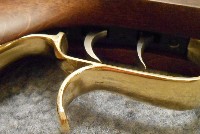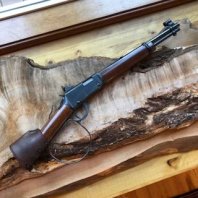

This is the rifle. It's a Winchester/Miroku 1885 Low Wall Hunter chambered in 223. It is basically identical to the several Rimfire Hunter versions we have in the same model, same dimensions, same weight (about 7.5 pounds), same light tapered octagon barrel. That's why we grabbed it when we found it. It wears an "okay" Redfield Revenge 4-12x40. Not crazy about it. Will probably change to a better scope, now that I've been vindicated for spending so much on the gun.

And you do have to grab these Winchester/Miroku 1885s when you find one in the configuration you want. Winchester/Miroku has never made these 1885s in anything but limited runs, usually no more than a year or two for a given configuration, then on to the next one. This is understandable. These are expensive guns with a very small market. Makes no sense to carry a lot of inventory on them. We got very lucky to find this very lightly used one. Not many used 1885s of any kind to be found out there, period.
The first trip to the range, though, with the Low Wall 223 proved to be less than what I had expected. Could only shoot at 50 yards, that day, but 50 yard groups didn't impress me. I expected more from the gun. Our more affordable CZ 527 in 223 easily printed smaller groups. Figured I'd have to come back and try, again, but try at 100 yards before drawing any conclusions.
That day came, but, alas, even with the pricey Hornady 55 grain V Max factory ammo, I could not get a string of 5 shots to print any better than an inch and three-quarters, most were over two inches. Lots of unexplained flyers. Very inconsistent in the way the gun would shoot. Again, the CZ 527 223 made it look bad. Very, very disappointing. At this point, I was seriously thinking about trading the rifle for something else. Such a beautiful rifle, though. Maybe I should give it one more chance.
Got home that very night and gave the rifle a thorough cleaning and careful inspection. Low and behold, the forearm was fastened down, gorilla tight. Not good. Forearms on these single shots are sensitive to bolt torque, so I loosened everything up, then carefully tightened up the bolts to a firm, but not excessively tight, setting.
Finally got a good day with no wind, last week and gave the 1885 Low Wall another try at 100 yards. I noticed an immediate improvement, as in no more flyers. I then discovered the gun was rather sensitive about how it was rested. A little experimentation and I was back on course. I then discovered that the gun was a bit touchy about how you gripped it to work the 3.5 pound, crisp trigger. Okay, check, I worked that one out, too. I felt I knew the gun well enough, now, to squeeze some decent accuracy out of it.
Finally, I tried for group size. Shot a decent three quarter inch 5 shot group, but it was not on target. Big improvement, though. Time to do some scope adjusting. Here's what the rifle and I did, next.
 images upload
First shot was low and to the right. Made an adjustment. Second shot was closer, but still a bit low and right. Another adjustment. Third shot was now high and to the left. Over adjusted, so I dialed back just a touch the other way on the scope. The next shot was in the orange. And the next one. And the next one. And the next one. And the next one. Got up from the bench to let Bill take a look though the spotting scope. (He hadn't been too keen to spend so much on the gun.) In the meantime, I breathed a huge sigh of relief. Even did a little happy dance, since no one else ws around.
I won't expect the gun to shoot under half an inch all the time - took my very best to get that done and this is no heavy barrel varmint gun - but just knowing the gun CAN shoot under half an inch is all the vindication I need for investing that much in the gun. Besides, it is a beautiful gun. Now I know that it is a beautiful gun AND accurate gun. Can't beat a combination like that. I do love happy endings. Every cowgirl does.