Site seems to be OK. Load issue should be resolved now.
Traces of Tx (today)
-
Shakey Jake
- Drover
- Posts: 4351
- Joined: Wed Aug 16, 2017 11:10 am
- Location: Sugar Land, TX
- Contact:

Re: Traces of Tx (today)
I came across this aerial photo by Basil Clemons of Breckenridge, Tx in 1921. It must have been something to have a well in your front yard.
- Attachments
-
- Breckingridge.jpg (1.22 MiB) Viewed 1058 times
-
Shakey Jake
- Drover
- Posts: 4351
- Joined: Wed Aug 16, 2017 11:10 am
- Location: Sugar Land, TX
- Contact:
Re: Traces of Tx (today)
Another fine picture from the UTA digital library. Here's a picture of some B-29 Superfortress flying over Fort Worth in the 1940's. I can only image that they were stationed at Carswell AFB after final modification at the Lockheed Martin plant.
- Attachments
-
- Bombers.jpg (779.8 KiB) Viewed 1053 times
-
Shakey Jake
- Drover
- Posts: 4351
- Joined: Wed Aug 16, 2017 11:10 am
- Location: Sugar Land, TX
- Contact:
Re: Traces of Tx (today)
My, oh, my.... this must have been one of the earliest drive throughs. Dated 1926 in Breckinridge, TX. I wonder what made the root beer Triple X?
I bet the food was good as well. This is another photo from the Basil Clemons collection at the UTA digital library.
I bet the food was good as well. This is another photo from the Basil Clemons collection at the UTA digital library.
- Attachments
-
- Drive Through.jpg (1.17 MiB) Viewed 1048 times
-
Shakey Jake
- Drover
- Posts: 4351
- Joined: Wed Aug 16, 2017 11:10 am
- Location: Sugar Land, TX
- Contact:
Re: Traces of Tx (today)
Here's a fine picture of kids on a scrap metal drive in Hunt County, Tx dated September 1942. It also comes from the UTA digital library. It has the description: Scrap metal drive. Left to right, Billy Joe Kilman, 6; Camille Few, 12; and Bonnie Dove Jones, 10; shown with pile of scrap metal. The detail is amazing.
- Attachments
-
- Scrap Metal Drive.jpg (893.06 KiB) Viewed 1041 times
-
Shakey Jake
- Drover
- Posts: 4351
- Joined: Wed Aug 16, 2017 11:10 am
- Location: Sugar Land, TX
- Contact:
Re: Traces of Tx (today)
From Traces of Tx Facebook :
"A ride at Luna Park in Houston, 1922. Is it just me or does the apparent construction of this ride look pretty flimsy? Maybe I'm just a wussy but those supporting cables look kind of skinny and the tower/derrick they are affixed to doesn't look like anything I'd necessarily trust.
Luna Park was an amusement park that was operated from 1924 until about 1934. The 36-acre "Coney Island of Texas" was built at a cost of $325,000 and featured a carousel, picnic areas, live entertainment (including diving horses), a dance hall with spring-supported floors, and various mechanical rides, including the Giant Skyrocket roller coaster. At night the park (located near 2200 Houston Avenue) was bathed in the light emitted from 50,000 light bulbs. While it was a trolley park, Houston's Luna Park was one of the first amusement parks to offer free automobile parking to its patrons.
I retrieved this from one of the most obscure internet places I've been to, the David Fried Coney Island Collection at Columbia University. But hey .... no digital distance too great to please the readers of this page."
As an addendum there were three deaths in the park in 1924. Two people died falling from the "Skyrocket" and the third by a professional parachutist, Montie LeMay, when his parachute failed to open. The following August (1925) a local barber was stabbed. A few years later in 1930 a corpse was found on the property and in 1932 a man was hijacked while sitting in his car on the property. Shortly after a Sherriff's deputy was assaulted in the park. The park closed permanently in 1934.
"A ride at Luna Park in Houston, 1922. Is it just me or does the apparent construction of this ride look pretty flimsy? Maybe I'm just a wussy but those supporting cables look kind of skinny and the tower/derrick they are affixed to doesn't look like anything I'd necessarily trust.
Luna Park was an amusement park that was operated from 1924 until about 1934. The 36-acre "Coney Island of Texas" was built at a cost of $325,000 and featured a carousel, picnic areas, live entertainment (including diving horses), a dance hall with spring-supported floors, and various mechanical rides, including the Giant Skyrocket roller coaster. At night the park (located near 2200 Houston Avenue) was bathed in the light emitted from 50,000 light bulbs. While it was a trolley park, Houston's Luna Park was one of the first amusement parks to offer free automobile parking to its patrons.
I retrieved this from one of the most obscure internet places I've been to, the David Fried Coney Island Collection at Columbia University. But hey .... no digital distance too great to please the readers of this page."
As an addendum there were three deaths in the park in 1924. Two people died falling from the "Skyrocket" and the third by a professional parachutist, Montie LeMay, when his parachute failed to open. The following August (1925) a local barber was stabbed. A few years later in 1930 a corpse was found on the property and in 1932 a man was hijacked while sitting in his car on the property. Shortly after a Sherriff's deputy was assaulted in the park. The park closed permanently in 1934.
- Attachments
-
- Luna Park.jpg (245.36 KiB) Viewed 1040 times

Re: Traces of Tx (today)
Not sure if you’re joking or not but here is the history of XXX root beer. It started up here in the Pacific Northwest and as a kid there was a Rutherford XXX Rootbeer burger joint out in the Spokane valley. I don’t know when it closed but it was there for decades. Ate there a few times but it was quite a distance from where I grew up as a kid so it wasn’t high on our list of burger joints.Shakey Jake wrote: ↑Mon Feb 20, 2023 5:32 pmMy, oh, my.... this must have been one of the earliest drive throughs. Dated 1926 in Breckinridge, TX. I wonder what made the root beer Triple X?
I bet the food was good as well. This is another photo from the Basil Clemons collection at the UTA digital library.
http://www.triplexrootbeer.com/history.htm
-
Shakey Jake
- Drover
- Posts: 4351
- Joined: Wed Aug 16, 2017 11:10 am
- Location: Sugar Land, TX
- Contact:
Re: Traces of Tx (today)
Thanks, I was wondering if it had any alcohol content to make it Triple X. I looked at the menu and the food looks delicious.Hatchdog wrote: ↑Tue Feb 21, 2023 12:33 pmNot sure if you’re joking or not but here is the history of XXX root beer. It started up here in the Pacific Northwest and as a kid there was a Rutherford XXX Rootbeer burger joint out in the Spokane valley. I don’t know when it closed but it was there for decades. Ate there a few times but it was quite a distance from where I grew up as a kid so it wasn’t high on our list of burger joints.Shakey Jake wrote: ↑Mon Feb 20, 2023 5:32 pmMy, oh, my.... this must have been one of the earliest drive throughs. Dated 1926 in Breckinridge, TX. I wonder what made the root beer Triple X?
I bet the food was good as well. This is another photo from the Basil Clemons collection at the UTA digital library.
http://www.triplexrootbeer.com/history.htm
Jake
-
Shakey Jake
- Drover
- Posts: 4351
- Joined: Wed Aug 16, 2017 11:10 am
- Location: Sugar Land, TX
- Contact:
Re: Traces of Tx (today)
From TSHA Texas Day by Day:
On this day in 1896, colorful lawman Roy Bean staged a heavyweight championship fight on a sandbar just below Langtry, on the Mexican side of the Rio Grande. Bean, known as the "Law West of the Pecos," was appointed justice of the peace for Pecos County in 1882. He settled at Eagle's Nest Springs, which acquired a post office and a new name, Langtry, in honor of the English actress Lillie Langtry, whom Bean greatly admired. Bean soon became known as an eccentric and original interpreter of the law. When a man killed a Chinese laborer, for example, Bean ruled that his law book did not make it illegal to kill a Chinese. And when a man carrying forty dollars and a pistol fell off a bridge, Bean fined the corpse forty dollars for carrying a concealed weapon, thereby providing funeral expenses. He intimidated and cheated people, but he never hanged anybody. He reached his peak of notoriety with his staging of the match between Peter Maher of Ireland and Bob Fitzsimmons of Australia. The fight was opposed by civic and religious leaders such as Baptist missionary Leander Millican, and both the Mexican and the U.S. governments had prohibited it. Bean arranged to hold it on the Mexican side of the Rio Grande, knowing the Mexican authorities could not conveniently reach the site, and that Woodford H. Mabry's Texas Rangers would have no jurisdiction. The spectators arrived aboard a chartered train; after a profitable delay contrived by Bean, the crowd witnessed Fitzsimmons's defeat of Maher in less than two minutes. Among the spectators was another somewhat disreputable lawman and boxing promoter, Bartholomew "Bat" Masterson.
On this day in 1896, colorful lawman Roy Bean staged a heavyweight championship fight on a sandbar just below Langtry, on the Mexican side of the Rio Grande. Bean, known as the "Law West of the Pecos," was appointed justice of the peace for Pecos County in 1882. He settled at Eagle's Nest Springs, which acquired a post office and a new name, Langtry, in honor of the English actress Lillie Langtry, whom Bean greatly admired. Bean soon became known as an eccentric and original interpreter of the law. When a man killed a Chinese laborer, for example, Bean ruled that his law book did not make it illegal to kill a Chinese. And when a man carrying forty dollars and a pistol fell off a bridge, Bean fined the corpse forty dollars for carrying a concealed weapon, thereby providing funeral expenses. He intimidated and cheated people, but he never hanged anybody. He reached his peak of notoriety with his staging of the match between Peter Maher of Ireland and Bob Fitzsimmons of Australia. The fight was opposed by civic and religious leaders such as Baptist missionary Leander Millican, and both the Mexican and the U.S. governments had prohibited it. Bean arranged to hold it on the Mexican side of the Rio Grande, knowing the Mexican authorities could not conveniently reach the site, and that Woodford H. Mabry's Texas Rangers would have no jurisdiction. The spectators arrived aboard a chartered train; after a profitable delay contrived by Bean, the crowd witnessed Fitzsimmons's defeat of Maher in less than two minutes. Among the spectators was another somewhat disreputable lawman and boxing promoter, Bartholomew "Bat" Masterson.
-
Shakey Jake
- Drover
- Posts: 4351
- Joined: Wed Aug 16, 2017 11:10 am
- Location: Sugar Land, TX
- Contact:
Re: Traces of Tx (today)
I came across this picture on the UTA digital website and it just got to me a bit. The photo's description tells it all:
Description: Private Milford Hawkins is back home with his wife and two children at 112 N. Riverside Drive after five months in a Nazi prison camp. Hawkins said he had really been wined and dined by his friends and relatives and with any number of delicious dishes since his return home, but his favorite of favorites is still Mrs. Roseland Hawkins' cocoanut cream pie. But we can't get the cocoanut so the next best thing is her lemon pie, which Mrs. Hawkins insists is an "ice box pie". She makes it by crumbling up about 20 or 25 vanilla wafers with a rolling pin, adding two tablespoons of melted butter and mixing well. That is put into a pie plate and pressed all around into an even crust. Then she takes a can of sweetened condensed milk, the juice of two lemons and two egg yolks, beat the lemon juice and eggs together, adds the milk and then pours the finished mixture into the crust. She says she makes the meringue out of the whites of two eggs and a teaspoon of sugar. The pie is browned in the oven and then chilled in the ice box before it is ready to be served. In this picture is Mrs. Hawkins making her pie in her kitchen. Published in the Fort Worth Star-Telegram evening edition, August 9, 1945.
Description: Private Milford Hawkins is back home with his wife and two children at 112 N. Riverside Drive after five months in a Nazi prison camp. Hawkins said he had really been wined and dined by his friends and relatives and with any number of delicious dishes since his return home, but his favorite of favorites is still Mrs. Roseland Hawkins' cocoanut cream pie. But we can't get the cocoanut so the next best thing is her lemon pie, which Mrs. Hawkins insists is an "ice box pie". She makes it by crumbling up about 20 or 25 vanilla wafers with a rolling pin, adding two tablespoons of melted butter and mixing well. That is put into a pie plate and pressed all around into an even crust. Then she takes a can of sweetened condensed milk, the juice of two lemons and two egg yolks, beat the lemon juice and eggs together, adds the milk and then pours the finished mixture into the crust. She says she makes the meringue out of the whites of two eggs and a teaspoon of sugar. The pie is browned in the oven and then chilled in the ice box before it is ready to be served. In this picture is Mrs. Hawkins making her pie in her kitchen. Published in the Fort Worth Star-Telegram evening edition, August 9, 1945.
- Attachments
-
- Pies.jpg (1009.83 KiB) Viewed 1023 times
-
Shakey Jake
- Drover
- Posts: 4351
- Joined: Wed Aug 16, 2017 11:10 am
- Location: Sugar Land, TX
- Contact:
Re: Traces of Tx (today)
Per TSHA on this day Nepomuceno Navarro changed sides and joined the Texas militia. Nepomuceno Navarro, a member of Juan N. Seguin's company of Tejanos who fought at the battle of San Jacinto, was a private in the Bexar Presidio in 1831. Apparently dissatisfied with military life, he deserted his post on two occasions. As a disciplinary measure, he was transferred to the Álamo de Parras Company, stationed at Fort Tenoxtitlán, a remote garrison near the Brazos River. When he arrived there, he found the conditions no better and, in many ways, worse than at his previous post. This prompted a series of regular troop desertions from that location as well. The frequency of these and the small size of the garrison usually resulted in Navarro's being returned to duty with little more than a reprimand. After the company returned to Bexar in 1832, the political turmoil that ensued prompted Navarro's permanent departure from the Mexican army. On February 22, 1836, he enlisted in Juan N. Seguín's company of Tejanos. He served with Seguín at San Jacinto and remained in the army until July 15, 1836. By 1840 he had married María de Jesús Urón and become the father of at least one child. For his participation in the Texas Revolution he received donation and bounty land grants including 320 acres in 1852 for military service from February 22 to July 15, 1836, and a pension. He was a member of the Texas Veterans Association until his death, in San Antonio on April 8, 1877.
-
Shakey Jake
- Drover
- Posts: 4351
- Joined: Wed Aug 16, 2017 11:10 am
- Location: Sugar Land, TX
- Contact:
Re: Traces of Tx (today)
Lieutenant Raymond L. Knight was a Thunderbolt pilot from Houston, Texas. He served with the 12th Air Force, 350th Fighter Group where he completed 98 combat missions. In April 1945, Lieutenant Knight destroyed 24 German planes during the Allied drive on the Po Valley in Italy. He attempted to fly his badly damaged plane, a P-47, back to base when he was caught in treacherous air conditions. He lost control of the plane and crashed in the Apennines Mountains. The 23-year-old Texan was awarded the Medal of Honor posthumously by the War Department. The medal was presented to his widow, Mrs. Johnnie Lee Knight. He was also awarded a Purple Heart, Distinguished Flying Cross, and an Air Medal. Lieutenant Knight is shown in his military portrait photograph. He is dressed in a pilot's cap and a leather flying jacket.
- Attachments
-
- Pilot.jpg (453.16 KiB) Viewed 1159 times
-
Shakey Jake
- Drover
- Posts: 4351
- Joined: Wed Aug 16, 2017 11:10 am
- Location: Sugar Land, TX
- Contact:
Re: Traces of Tx (today)
I found this early picture of the Texas Prison Rodeo (10-03-1932). It used to be a big deal and drew huge crowds. Here's information about it from TSHA:
The Texas Prison Rodeo, instituted in 1931 by general prison manager Marshall Lee Simmons as recreation for inmates and entertainment for staff and their families, soon earned a reputation as the wildest of cowboy shows, attracting huge crowds and favorable publicity to the Huntsville unit. After securing the blessing of local clergy to hold the rodeo on Sunday afternoons in October, Simmons trucked in livestock, participants, and spectators from the outlying prison farms to a vacant field behind "The Walls." Within two years public attendance swelled from a handful of outsiders to almost 15,000, prompting prison officials to erect wooden stands and charge admission. The revenue raised covered costs and subsidized an education and recreation fund that provided perquisites from textbooks and dentures to Christmas turkeys. In 1986, just before structural problems with the stadium suspended the rodeo indefinitely, it grossed $450,000 from an estimated 50,000 fans. The Texas Prison Rodeo provided the usual rodeo events, calf roping, bronc riding, bull riding, bareback basketball, and wild cow milking. In the "Mad Scramble" ten surly Brahmans charged out of the chutes simultaneously, snorting and bucking as the inmates in the saddles tried to race them to the other side of the arena. In "Hard Money" red-shirted convicts vied against the clock and each other to snatch a tobacco sack full of cash from between the horns of a bull. By 1933 rodeo directors had banned steer wrestling, apparently because they feared the event posed a greater injury risk than other events. At first Simmons limited participation to experienced ranch hands, but by the 1940s any male inmate with guts and a clean record for the year could compete at open tryouts in September for one of 100 or so rodeo slots. Until their transfer from the Goree unit to distant Gatesville in 1981, women also entertained and participated in calf roping, barrel racing, and greased pig sacking.
Prisoners earned money for performing-two dollars in 1933, ten dollars in 1986-and for winning. Supplemented by the crowd, the "Hard Money" sometimes totaled as much as $1,000 in the 1980s. Yet for many convicts the purses mattered less than the pride of accomplishment. Sentenced to life imprisonment for the axe murder of his father, O'Neal Browning gained celebrity on both sides of the bars as the top hand in seven rodeos over three decades. Clowns amused the crowd and distracted the bulls while downed riders made a getaway. By popular demand, 1939 rodeo clowns Charlie Jones and Louie Nettles-"Fathead" and "Soupbone"-broadcast their routines on Huntsville's weekly radio program, Behind the Walls. "They give me life fer just goin' off an leavin' my wife." "Now wait a minute, Fathead...How did you leave your wife?" "Why, I left her dead!" With equally irreverent humor the announcer paced the rodeo, commenting on the ups and downs of each inmate. "He's going to be plenty good some of these days. He's eligible for ninety-seven more of these affairs." During halftime western and country music stars such as Tom Mix, Loretta Lynn, and Willie Nelson performed for the audience. At the end of the afternoon a panel of judges awarded a silver belt buckle to the best all-around competitor.
The logistics of the rodeo involved the entire prison system, as well as the local community. Farm inmates helped round up wild steers from river bottom pastures. At the Goree unit women sewed the cowboys' zebra-striped uniforms. Printers and journalists from "The Walls" produced souvenir programs, and leatherworkers tooled saddles and chaps for riders whose families could not provide equipment. On rodeo weekends Huntsville residents capitalized on the influx of tourists by opening their restaurants, stores, and driveways. Prison guards also worked overtime, supervising the "rolling jails" of convict spectators from the farms and "the midway" of inmate arts and crafts and music. Like the men in the saddle, the Texas Prison Rodeo tumbled from time to time. Despite the medical personnel standing by, two inmates died in the arena. Others suffered broken bones and assorted injuries. One year a pair of prisoners escaped by slipping under the bleachers, where an accomplice had left civilian clothes. As they exited, a guard spotted them "and-thinking that they were sneaking in-promptly threw them out." By the 1950s, as rodeo professionals staged exhibitions and big-name entertainers edged out the inmate string bands and gospel choirs, a few fans pined for the cozier contests of the early years. But the popularity of the rodeo always outstripped the facilities. In 1938 the warden at Huntsville doubled the seating after turning away many tourists the year before. Although war cutbacks cancelled the show in 1943, the Victory Rodeo of the next year lured back such a following that officials replaced the wooden bleachers with a concrete-and-steel structure in 1950. While the construction was underway the show was moved to Dallas. Over the next decade annual attendance peaked at about 100,000, but by the 1970s and 1980s the energy crisis, bad weather, and lack of advertising had decimated the crowd. Still, the rodeo was drawing tens of thousands of supporters when engineers condemned the stadium at the end of 1986. Unable to raise half a million dollars for renovations, prison officials ended the proud tradition of "outlaw meets outlaw" in the dusty ring behind "The Walls." In the early 1990s attempts to revive the rodeo were unsuccessful.
The Texas Prison Rodeo, instituted in 1931 by general prison manager Marshall Lee Simmons as recreation for inmates and entertainment for staff and their families, soon earned a reputation as the wildest of cowboy shows, attracting huge crowds and favorable publicity to the Huntsville unit. After securing the blessing of local clergy to hold the rodeo on Sunday afternoons in October, Simmons trucked in livestock, participants, and spectators from the outlying prison farms to a vacant field behind "The Walls." Within two years public attendance swelled from a handful of outsiders to almost 15,000, prompting prison officials to erect wooden stands and charge admission. The revenue raised covered costs and subsidized an education and recreation fund that provided perquisites from textbooks and dentures to Christmas turkeys. In 1986, just before structural problems with the stadium suspended the rodeo indefinitely, it grossed $450,000 from an estimated 50,000 fans. The Texas Prison Rodeo provided the usual rodeo events, calf roping, bronc riding, bull riding, bareback basketball, and wild cow milking. In the "Mad Scramble" ten surly Brahmans charged out of the chutes simultaneously, snorting and bucking as the inmates in the saddles tried to race them to the other side of the arena. In "Hard Money" red-shirted convicts vied against the clock and each other to snatch a tobacco sack full of cash from between the horns of a bull. By 1933 rodeo directors had banned steer wrestling, apparently because they feared the event posed a greater injury risk than other events. At first Simmons limited participation to experienced ranch hands, but by the 1940s any male inmate with guts and a clean record for the year could compete at open tryouts in September for one of 100 or so rodeo slots. Until their transfer from the Goree unit to distant Gatesville in 1981, women also entertained and participated in calf roping, barrel racing, and greased pig sacking.
Prisoners earned money for performing-two dollars in 1933, ten dollars in 1986-and for winning. Supplemented by the crowd, the "Hard Money" sometimes totaled as much as $1,000 in the 1980s. Yet for many convicts the purses mattered less than the pride of accomplishment. Sentenced to life imprisonment for the axe murder of his father, O'Neal Browning gained celebrity on both sides of the bars as the top hand in seven rodeos over three decades. Clowns amused the crowd and distracted the bulls while downed riders made a getaway. By popular demand, 1939 rodeo clowns Charlie Jones and Louie Nettles-"Fathead" and "Soupbone"-broadcast their routines on Huntsville's weekly radio program, Behind the Walls. "They give me life fer just goin' off an leavin' my wife." "Now wait a minute, Fathead...How did you leave your wife?" "Why, I left her dead!" With equally irreverent humor the announcer paced the rodeo, commenting on the ups and downs of each inmate. "He's going to be plenty good some of these days. He's eligible for ninety-seven more of these affairs." During halftime western and country music stars such as Tom Mix, Loretta Lynn, and Willie Nelson performed for the audience. At the end of the afternoon a panel of judges awarded a silver belt buckle to the best all-around competitor.
The logistics of the rodeo involved the entire prison system, as well as the local community. Farm inmates helped round up wild steers from river bottom pastures. At the Goree unit women sewed the cowboys' zebra-striped uniforms. Printers and journalists from "The Walls" produced souvenir programs, and leatherworkers tooled saddles and chaps for riders whose families could not provide equipment. On rodeo weekends Huntsville residents capitalized on the influx of tourists by opening their restaurants, stores, and driveways. Prison guards also worked overtime, supervising the "rolling jails" of convict spectators from the farms and "the midway" of inmate arts and crafts and music. Like the men in the saddle, the Texas Prison Rodeo tumbled from time to time. Despite the medical personnel standing by, two inmates died in the arena. Others suffered broken bones and assorted injuries. One year a pair of prisoners escaped by slipping under the bleachers, where an accomplice had left civilian clothes. As they exited, a guard spotted them "and-thinking that they were sneaking in-promptly threw them out." By the 1950s, as rodeo professionals staged exhibitions and big-name entertainers edged out the inmate string bands and gospel choirs, a few fans pined for the cozier contests of the early years. But the popularity of the rodeo always outstripped the facilities. In 1938 the warden at Huntsville doubled the seating after turning away many tourists the year before. Although war cutbacks cancelled the show in 1943, the Victory Rodeo of the next year lured back such a following that officials replaced the wooden bleachers with a concrete-and-steel structure in 1950. While the construction was underway the show was moved to Dallas. Over the next decade annual attendance peaked at about 100,000, but by the 1970s and 1980s the energy crisis, bad weather, and lack of advertising had decimated the crowd. Still, the rodeo was drawing tens of thousands of supporters when engineers condemned the stadium at the end of 1986. Unable to raise half a million dollars for renovations, prison officials ended the proud tradition of "outlaw meets outlaw" in the dusty ring behind "The Walls." In the early 1990s attempts to revive the rodeo were unsuccessful.
- Attachments
-
- Texas Prison Rodeo.jpg (262.12 KiB) Viewed 1152 times
-
Shakey Jake
- Drover
- Posts: 4351
- Joined: Wed Aug 16, 2017 11:10 am
- Location: Sugar Land, TX
- Contact:
Re: Traces of Tx (today)
On this day in 1836, Samuel Colt, of Hartford, Connecticut, patented the Colt revolver. This invention, along with windmills and barbed wire, brought order to the Great Plains. It was eventually produced in numerous models, the most famous being that of 1871. In 1839 the Republic of Texas ordered 180 of the .36 caliber holster models for the Texas Navy. The Texas Rangers gave the Colt revolver its reputation as a weapon ideally suited for mounted combat. Frederick Law Olmsted remarked that "there were probably as many revolvers in Texas as there were males."
- Attachments
-
- colt_samuel.jpg (13.27 KiB) Viewed 1140 times
-
Shakey Jake
- Drover
- Posts: 4351
- Joined: Wed Aug 16, 2017 11:10 am
- Location: Sugar Land, TX
- Contact:
Re: Traces of Tx (today)
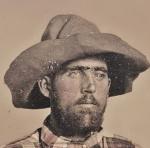
On this day in 1871, brothers Clint and Jeff Smith, ten and eight years old respectively, were captured by Lipans and Comanches while herding sheep near their family's home on Cibolo Creek between San Antonio and Boerne (pronounced "bur-knee). After an initial rescue effort failed, their father, Capt. Henry Smith, and Capt. John W. Sansom, a cousin, assembled a large body of Texas Rangers and local militia, who, along with a posse led by Capt. Charles Schreiner, pursued the Indians from near Kendalia to Fort Concho in West Texas. The rescue attempt was futile, however, and Clint and Jeff were not returned to their family for another five years. J. Marvin Hunter told the tale of their captivity, laced with predictable adventures, a few inconsistencies, and the names of many prominent chiefs, including Geronimo, in a book entitled The Boy Captives. Hunter interviewed the brothers in their sixties, after they had long enjoyed their fame as "frontier" celebrities and performers of the Old West. Clint died in 1932 and Jeff in 1940. Pictured below is Clint Smith (1860-1932).
- Attachments
-
- Clint Smith.jpeg (34.55 KiB) Viewed 1130 times
-
Shakey Jake
- Drover
- Posts: 4351
- Joined: Wed Aug 16, 2017 11:10 am
- Location: Sugar Land, TX
- Contact:
Re: Traces of Tx (today)
Per TSHA:
On this day in 1907, Justina Luckenbach died, four years to the day before the death of her husband Jacob. Both Luckenbachs were born in Germany and came to Texas in late 1845. In January 1846 they were among the first settlers in Fredericksburg. Jacob Luckenbach was allocated a town lot in the new village and a ten-acre lot southwest of town, where he built the family's first home. The Luckenbach family became American citizens in 1852 and shortly thereafter sold both Fredericksburg properties and moved twelve miles southeast. When she was appointed postmistress at the site, Sophie Engel named the post office Luckenbach in honor of her fiancé, Jacob and Justina's son Albert. Jacob and Justina Luckenbach raised three boys and nine girls in all. In 1883 they sold their property in Luckenbach and retired in Boerne, to be near six of their children who lived there. The population of Luckenbach peaked at 492 in 1904, but declined dramatically in the following decades. John Russell (Hondo) Crouch, from nearby Comfort, bought the "town" in 1971. Styling himself the "mayor" and "Clown Prince of Luckenbach," Crouch declared Luckenbach "a free state...of mind." Popularized in regional culture as the place where "Everybody is Somebody," Luckenbach achieved mythic proportions in 1977, the year after Crouch's death, when the Waylon Jennings song "Luckenbach, Texas (Back to the Basics of Love)" became a national favorite.
On this day in 1907, Justina Luckenbach died, four years to the day before the death of her husband Jacob. Both Luckenbachs were born in Germany and came to Texas in late 1845. In January 1846 they were among the first settlers in Fredericksburg. Jacob Luckenbach was allocated a town lot in the new village and a ten-acre lot southwest of town, where he built the family's first home. The Luckenbach family became American citizens in 1852 and shortly thereafter sold both Fredericksburg properties and moved twelve miles southeast. When she was appointed postmistress at the site, Sophie Engel named the post office Luckenbach in honor of her fiancé, Jacob and Justina's son Albert. Jacob and Justina Luckenbach raised three boys and nine girls in all. In 1883 they sold their property in Luckenbach and retired in Boerne, to be near six of their children who lived there. The population of Luckenbach peaked at 492 in 1904, but declined dramatically in the following decades. John Russell (Hondo) Crouch, from nearby Comfort, bought the "town" in 1971. Styling himself the "mayor" and "Clown Prince of Luckenbach," Crouch declared Luckenbach "a free state...of mind." Popularized in regional culture as the place where "Everybody is Somebody," Luckenbach achieved mythic proportions in 1977, the year after Crouch's death, when the Waylon Jennings song "Luckenbach, Texas (Back to the Basics of Love)" became a national favorite.
- Attachments
-
- Luckenbach.jpg (332.66 KiB) Viewed 1120 times
-
Shakey Jake
- Drover
- Posts: 4351
- Joined: Wed Aug 16, 2017 11:10 am
- Location: Sugar Land, TX
- Contact:
Re: Traces of Tx (today)
On this day in 1859, Anson Mills submitted a street map of a settlement at the far western tip of Texas called variously Ponce's Rancho, Franklin, and Smithsville. He called the little community El Paso, and the name stuck. The city's downtown is still practically as he platted it. Mills was born in Indiana in 1834. After flunking out of West Point, he rode the Butterfield Overland Mail stage to El Paso in 1858. He was appointed district surveyor and surveyed forts Quitman, Davis, Stockton, and Bliss. He also built the Overland Building, for three decades the city's largest structure, and the Mills Building, which remains a major El Paso landmark. Mills is best remembered, however, as the boundary commissioner who refused to accept the 1911 arbitration agreement that gave the disputed Chamizal tract to Mexico. He died in 1924.
You can go to this link for more information on Anson Mills: https://www.tshaonline.org/handbook/entries/mills-anson
You can go to this link for more information on Anson Mills: https://www.tshaonline.org/handbook/entries/mills-anson
-
Shakey Jake
- Drover
- Posts: 4351
- Joined: Wed Aug 16, 2017 11:10 am
- Location: Sugar Land, TX
- Contact:
Re: Traces of Tx (today)
Another fine picture from the UTA digital library. There are so many that it would take me the rest of my days to go through them all. Here's a picture of the 1905 Fort Worth Cats of the Texas League. Here's a brief description from TSHA:
Professional baseball in Fort Worth dates back to 1888, when the Fort Worth Panthers joined the Texas League. Not surprisingly, given Fort Worth’s proximity to Dallas, a longstanding rivalry ensued. The Panthers nickname derived from a Dallas newspaper article asserting that Fort Worth was such a sleepy town that a panther could be seen sound asleep in the heart of downtown. The team was often referred to locally as the Cats. By the 1930s this name had replaced the official nickname in popular usage, but it was not until after World War II that the team’s jerseys bore the name “Cats.” In 1895 Fort Worth won the league championship, and Dallas was the runner-up.
Professional baseball in Fort Worth dates back to 1888, when the Fort Worth Panthers joined the Texas League. Not surprisingly, given Fort Worth’s proximity to Dallas, a longstanding rivalry ensued. The Panthers nickname derived from a Dallas newspaper article asserting that Fort Worth was such a sleepy town that a panther could be seen sound asleep in the heart of downtown. The team was often referred to locally as the Cats. By the 1930s this name had replaced the official nickname in popular usage, but it was not until after World War II that the team’s jerseys bore the name “Cats.” In 1895 Fort Worth won the league championship, and Dallas was the runner-up.
- Attachments
-
- Fort Worth Cats.jpg (1.39 MiB) Viewed 1100 times
-
Shakey Jake
- Drover
- Posts: 4351
- Joined: Wed Aug 16, 2017 11:10 am
- Location: Sugar Land, TX
- Contact:
Re: Traces of Tx (today)
Legendary Texas Ranger Frank Hamer, far right, and three of the law enforcement personnel who helped him ambush and kill Bonnie and Clyde.
- Attachments
-
- Frank Hamer.jpg (160 KiB) Viewed 1096 times
-
Shakey Jake
- Drover
- Posts: 4351
- Joined: Wed Aug 16, 2017 11:10 am
- Location: Sugar Land, TX
- Contact:
Re: Traces of Tx (today)
On this day in 1836, Texas became a republic. On March 1 delegates from the seventeen Mexican municipalities of Texas and the settlement of Pecan Point met at Washington-on-the-Brazos to consider independence from Mexico. George C. Childress presented a resolution calling for independence, and the chairman of the convention appointed Childress to head a committee of five to draft a declaration of independence. In the early morning hours of March 2, the convention voted unanimously to accept the resolution. After fifty-nine members signed the document, Texas became the Republic of Texas. The change remained to be demonstrated to Mexico.
-
Shakey Jake
- Drover
- Posts: 4351
- Joined: Wed Aug 16, 2017 11:10 am
- Location: Sugar Land, TX
- Contact:
Re: Traces of Tx (today)
On this day in 1837, President Andrew Jackson appointed Alcée Louis La Branche to be the first diplomat from the United States to the Republic of Texas. As United States chargé d'affaires, La Branche negotiated the settlement of the cases concerning the brigs Pocket and Durango and a temporary commerce agreement. He aggressively defended the United States claim to disputed territory in Red River County. On April 25, 1838, the two countries signed the Convention of Limits, which recognized Texas claims to the contested county and the Sabine River as the eastern boundary of Texas. However, tension continued between the Republic of Texas and the United States regarding Indian depredations along the northern border. La Branche protested Texas army crossings of the border in pursuit of Indians. He believed that the majority of Indian attacks were caused by Texans' trespassing and surveying Indian lands. La Branche's reports on real or rumored Mexican attacks expressed optimism about the Texans' ability to retain their independence. On April 2, 1840, La Branche resigned his post to attend to personal affairs. His clear, calm reports enabled his government to be sensitive to the Texas position on various issues.