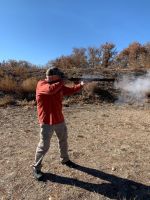
First photo was on my 12" X 20" steel plate at 45 yards with my Bisley offhand. Most of the vertical dispersion was adjusting the sight elevation. The first shots were high and I had to move the rear sight down several clicks.
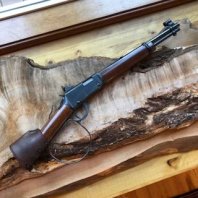
Second photo is 10 shots at 45 yards, same plate with my Henry. 5 shots sitting on the ground resting my elbows on my knees. The 5 remaining were standing resting my palm on an 4X4 with my thumb supporting the forearm. That was a bit more solid rest than sitting.
Third photo was 10 shots with the Henry standing, no support.
After that I moved to a 100, 200, 300 yard range. I sighted the Henry with this load in at 100 yards off the bench. I had to tap the rear sight a bit to the left and raise the tab in the semi buckhorn just a very tiny amount. That movement was barely visible to my eyes. No photos of this target, but for my last three shots I aimed at the 4" X 4" head section of my steel plate. All three were inside that section, about a 2 1/2" group or so. I was happy with that. I then raised the elevator two notches to the second highest notch. I aimed at the very bottom edge of the 20" tall plate and took a couple of shots, both were over the top, either over the shoulders or head, I could not tell. I figured that based on a ballistics calculator with this load, it should be a bit high at 200 yards.
The last photo is the range's steel plate at 200 yards. It is about the same size as my plate, maybe an inch narrower. I hit it the first attempt and got all excited. Next several were misses that were low, so much for that ballistics calculator (or this 200 yard range is actually longer?). I then started getting some hits if I held two thirds up the plate. I then raised the rear sight to the highest notch on the elevator. By holding on the bottom edge of the plate I got consistent hits. Pretty fun to see the plate swing and then wait to hear the plink
 Cross winds were pretty high yesterday with the range flag extended a full 90 degrees, but most of the range was not exposed except for a section of 40 or 50 yards.